The best AI Korean learning apps: tested & reviewed
Want to learn Korean with AI? I've spent years building language learning tools and testing every major AI app on the market. The quality varies dramatically across platforms.
AI technology is going to change how we learn languages. But with so many choices available, it can be overwhelming for learners trying to decide.
In this article, I'll share my top recommendations for AI Korean tutors based on what I've seen actually helps learners improve.
The Best Tools for AI Korean Conversation Practice
#1: Langua
Best for: Motivated Learners of Korean
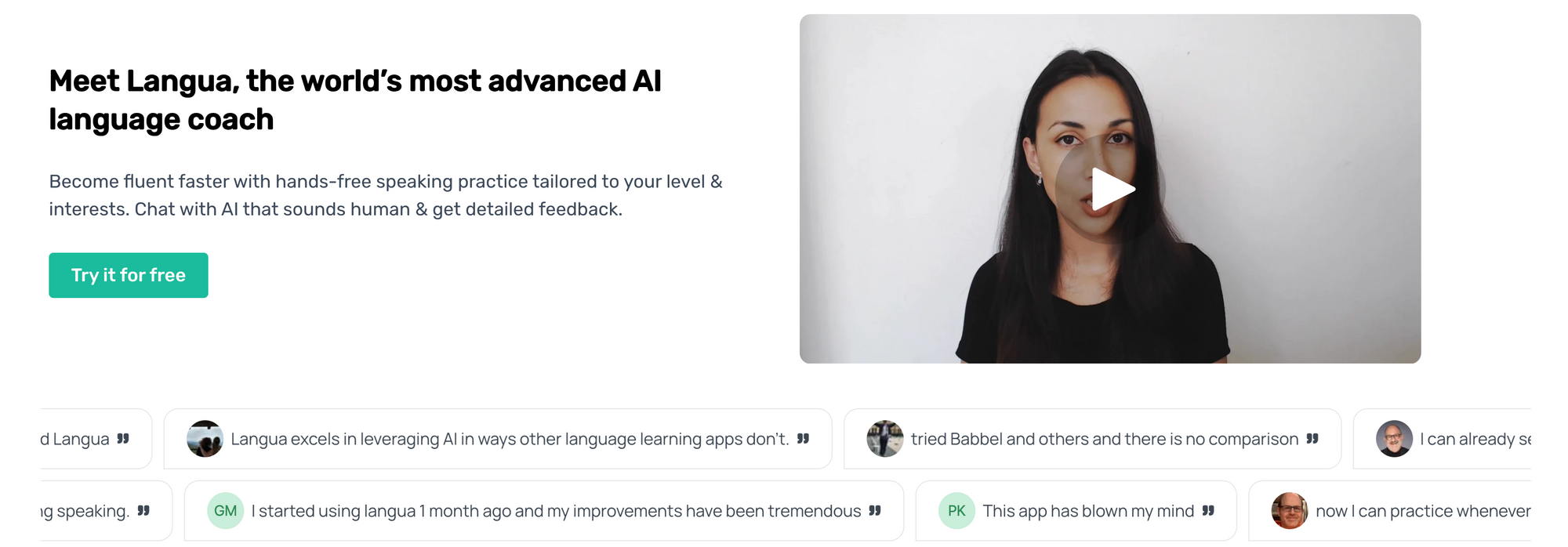
Langua is the most realistic AI tool for Korean conversation practice. The voices are cloned from native Korean speakers, making conversations feel genuinely human. Combined with detailed feedback, intelligent vocabulary integration, and grammar drills based on your mistakes, it's built for those serious about reaching fluency.
Pros
- Multiple ways to get feedback - view corrections below your messages, turn on a setting to get verbal corrections during the conversation, or access a comprehensive feedback report afterward.
- Uses the most advanced voice technology. Unlike other apps that sound robotic, Langua feels like you're talking to a real Korean native speaker. The voices are clones of actual people.
- Wide range of conversation options designed for language learners: practical roleplays (checking into hotels, ordering food), thought-provoking debates, discussions about your interests, and vocabulary-focused practice.
- Speak in your native language when stuck, and the AI will usually still understand you. This is extremely helpful for A1-A2 Korean learners.
- Save words and phrases, then learn them via spaced repetition flashcards. The AI will intelligently incorporate your saved words into future conversations.
- Available on any device: desktop (via website) or tablet/mobile through apps: iOS (Apple) | Android (Google Play)
Cons
- Like all AI platforms, transcription sometimes "fixes" what you say instead of capturing your exact words. Langua uses the most accurate models available and offers multiple AI model options to minimize this.
- May occasionally miss correcting you due to inherent AI limitations, though this improves with each update.
- No romanization (transliteration) support for Korean yet, though this is being added soon. Note that most other AI Korean apps don't offer this either.
- Tricky for complete beginners, though the app includes beginner-friendly features like suggested replies and a guided course.
Pricing: $12 to $29/month (depending on your subscription type). Offers a multi-day free trial so you can test the website and/or app. You can create a free account on Langua and explore it here.
#2: ChatGPT
Best for: Folks Who Want to Learn for Free
ChatGPT is a versatile AI tool that can be used for Korean conversation practice, though it wasn't specifically designed for language learning.
Pros
- Can engage in conversations on virtually any topic in Korean.
- Free version allows more access than language learning apps.
Cons
- You must design your own learning prompts every time - requires significant time and effort compared to dedicated language learning apps with pre-built conversation scenarios.
- Speaks too fast for most learners and you cannot reliably slow it down - making it challenging for beginner and intermediate levels.
- No word or sentence highlighting to help you follow along as the AI speaks.
- Doesn't automatically correct mistakes - you must explicitly ask it to, and it often forgets even when instructed.
Pricing: Free tier available with usage caps and limited access to the best models. ChatGPT Plus costs $20/month.
#3: Speak
Best for: Beginners Who Want Structured Practice
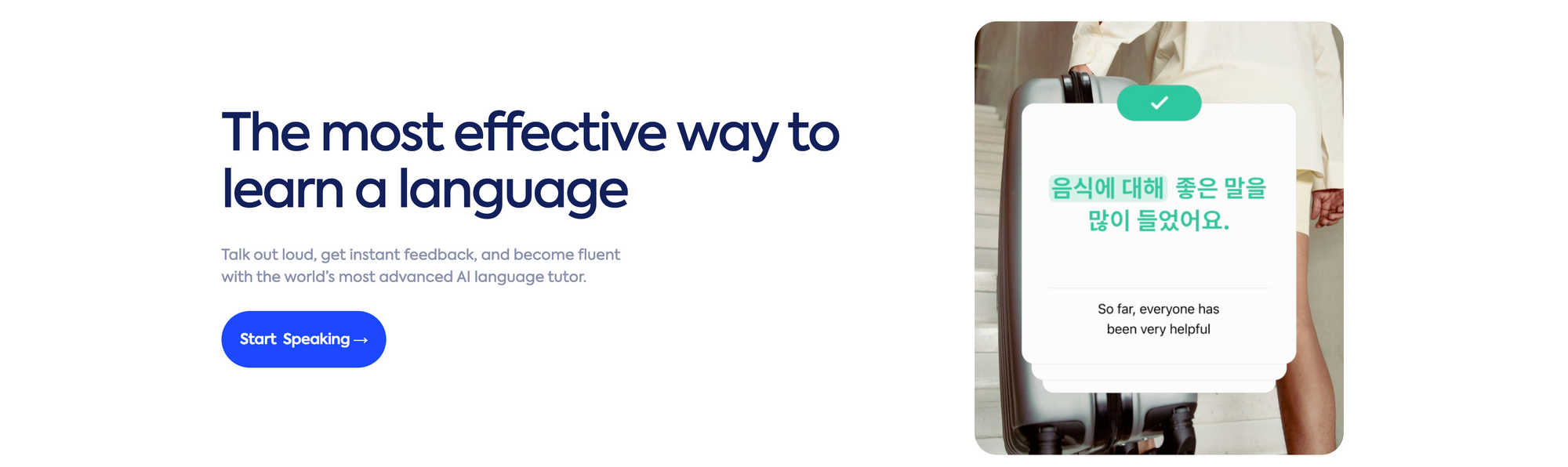
Speak offers a well-designed experience with engaging roleplay scenarios and a tutor feature for grammar questions. It works well for beginners who want structured Korean practice, though the flexibility and personalization doesn't match Langua.
Pros
- Clear, natural-sounding voices with relatively accurate speech recognition.
- Engaging roleplay scenarios with cultural context specific to Korean-speaking countries.
- "Speak Tutor" feature allows you to ask Korean grammar questions and request custom lessons.
Cons
- Feedback is brief and lacks depth needed for sustained improvement.
- Limited variety in lesson types - can feel repetitive at higher levels.
- No spaced repetition system or long-term vocabulary tracking.
- Conversations feel more rigid and scenario-based rather than flexible and open-ended.
- Premium tier structure can be confusing with unclear AI lesson limits.
- Limited control over voice selection and Korean dialect options.
Pricing: Premium and Premium Plus tiers available. Pricing varies by country, but Premium Plus (unlimited custom lessons) is significantly more expensive than the base tier. The distinction between tiers isn't always clear at signup.
Read a full Speak review here.
#4: Univerbal
Best for: Folks Who Want a Gamified App
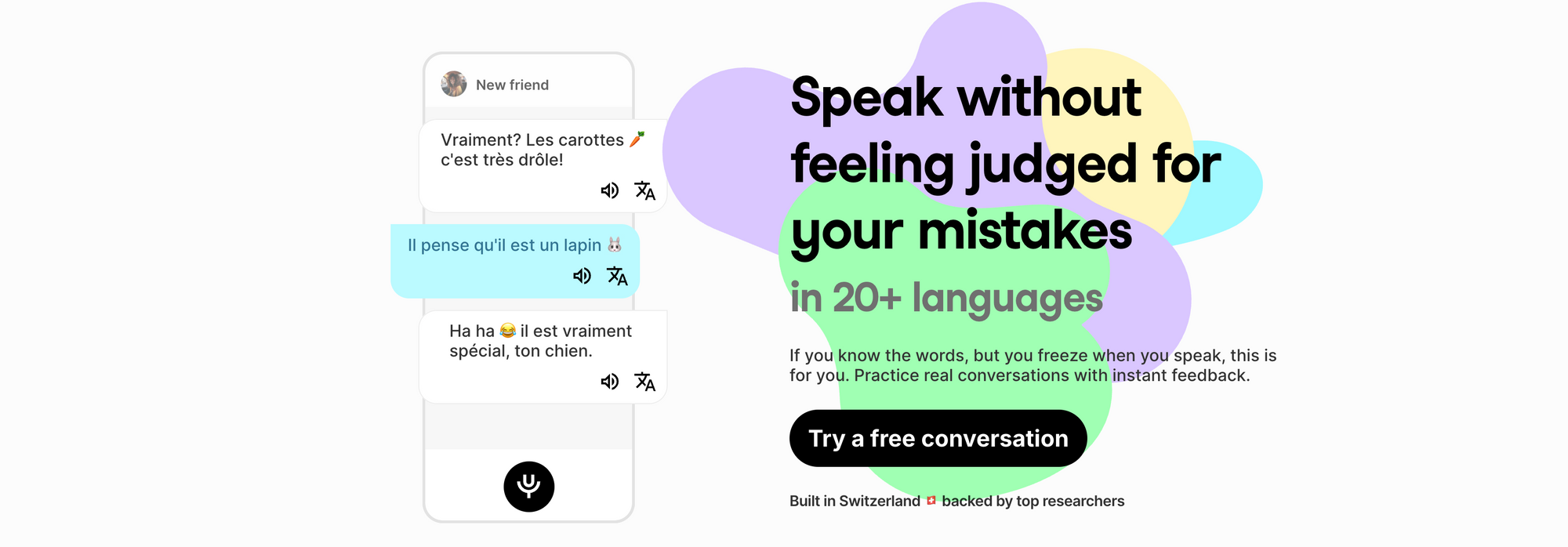
Univerbal is a Swiss language learning app that offers AI Korean conversation practice with a structured, game-like approach.
Pros
- User-friendly interface that's easy to navigate.
- Variety of structured roleplays covering real-life scenarios (travel, work, daily conversations).
- Mobile app makes it convenient to practice Korean on the go.
- Personalized curriculum based on your stated interests and goals.
Cons
- Voice transcription can be buggy - sometimes stops recording mid-sentence, disrupting the conversation.
- Limited flexibility for learners who prefer open-ended conversations tailored to their interests.
- Suggested topics aren't always practical for everyday Korean use.
- No clear spaced repetition system for vocabulary retention.
Pricing: Subscription-based (pricing varies by region). Mobile app available on iOS and Android.
#5: Langotalk
Best for: Learners Who Want Extensive Features
Langotalk offers an AI Korean tutor with extensive features, though the execution has notable drawbacks.
Pros
- Voice transcription quality is fairly solid and was more accurate than some of the other apps I tried.
- Extensive range of conversation options and scenarios.
- Offers many features for different learning styles.
Cons
- AI characters sound robotic compared to Langua's voice-cloned native speakers.
- The app feels overwhelming and disorganized with too many options and features competing for attention.
- AI characters are animated drawings, which combined with robotic voices, makes it feel artificial rather than human.
- Feedback is limited to text only (doesn't provide verbal corrections during conversation).
- No monthly subscription option - minimum commitment is 3 months.
- Mixed user reviews, with frequent mentions of technical issues and subscription cancellation difficulties.
Pricing: Varies by region, typically starting around $50 USD for a 3-month commitment (no monthly option available).
Conclusion
AI has made learning Korean more accessible than ever, but the quality varies dramatically between platforms. ChatGPT works as a limited free option for those on a tight budget.
However, if you're serious about building fluency in Korean, Langua stands out for its realistic human-cloned voices, comprehensive feedback, and intelligent vocabulary integration.
Frequently Asked Questions
Can I use AI to learn Korean?
Yes, AI is an excellent tool for Korean conversation practice. The best apps provide realistic conversation practice, instant feedback, and personalized learning experiences. However, AI works best when combined with other learning methods like human tutoring sessions and listening to Korean podcasts.
What's the best free AI for learning Korean?
ChatGPT is your best free option for Korean practice. It works reasonably well for advanced learners who want open-ended conversation practice. However, it has significant limitations. For serious practice, you'll want an AI Korean tutor specifically designed for language learning. Most require a subscription, though Langua offers a free trial that gives you enough time to see if the features are worth paying for.
Is AI better than a human Korean tutor?
No, AI shouldn't completely replace a human Korean tutor. While AI tools excel at conversation practice and provide instant feedback, human tutors offer irreplaceable benefits: personalized guidance tailored to your specific challenges, cultural insights about Korean society, emotional support and motivation, and the human connection that makes learning more engaging.
The ideal approach combines both: use AI for daily practice and immediate feedback, then work with a human tutor for deeper learning, cultural context, and personalized guidance.
What are the limitations of AI for learning Korean?
While AI conversation practice has improved dramatically, there are still important limitations to keep in mind:
- AI may occasionally miss grammar corrections or pronunciation errors
- Can't fully replicate the nuances and spontaneity of natural Korean conversation
- Lacks the cultural context and real-world experience that human tutors provide
- May not catch subtle mistakes in Korean formality levels (which are crucial in the language)
- Doesn't provide the emotional connection and motivation that comes from human interaction
How can I get the most out of AI Korean practice?
To maximize your progress with AI conversation practice:
- Practice consistently - even 10-15 minutes daily is more effective than occasional long sessions
- Use the feedback features - review corrections and actually learn from your mistakes
- Save vocabulary you encounter and review it through spaced repetition
- Vary your conversation topics to build diverse vocabulary
- Combine AI practice with other learning methods (human tutors, K-dramas, Korean podcasts)
- Don't be afraid to make mistakes - AI is a judgment-free environment for practice
- Start with guided conversations if you're a beginner, then progress to free-form chat