
The best AI Portuguese learning apps: tested & reviewed
As a language teacher, I'm always searching for resources to help my students practice between our sessions. I've spent significant time testing AI apps that claim to help with speaking Portuguese & Spanish, and I've found that quality varies dramatically across platforms.
AI technology is going to change how we learn languages. But with so many choices available, it can be overwhelming for learners trying to decide.
In this article, I'll share my top recommendations for Portuguese conversation practice using AI, based on what I've seen actually helps students improve. I'll focus on the essentials: pros, cons, and costs.
The Best Tools for AI Portuguese Conversation Practice
#1: Langua
Best for: Motivated Learners of Portuguese
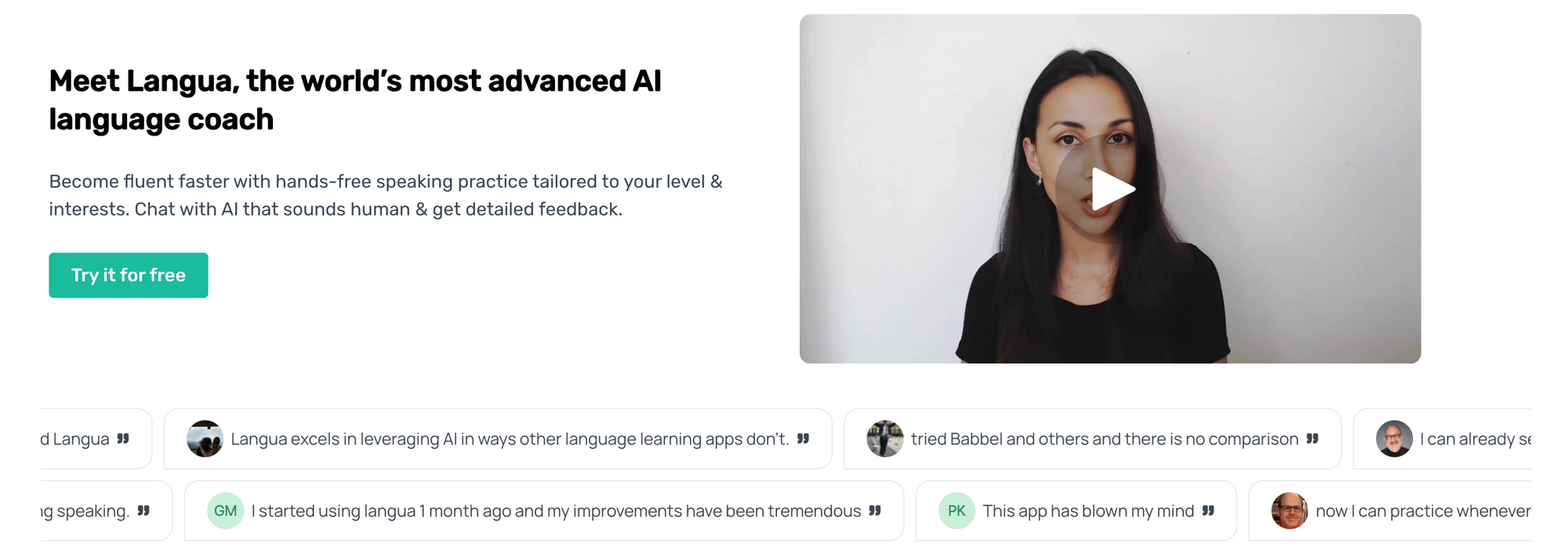
Langua is a powerful AI platform built for learners who want to take their Portuguese conversation skills to the next level, while also offering ways to learn through listening, reading, and flashcards.
Advantages:
- Choose your preferred Portuguese dialect (Brazilian, European) based on what you want to learn.
- Unlike other apps, you'll feel like you're talking with a real person rather than a robot. This takes some getting used to! Many of the voices are cloned from language learning YouTubers that Langua has partnered with.
- Get instant corrections with detailed explanations, giving you deeper insight into your mistakes. You can also access a comprehensive feedback report after each conversation.
- Offers a wide range of conversation options designed for language learning: practical roleplays, thought-provoking debates, discussions about your interests, and more.
- Available on any device - desktop via website or tablet/mobile through apps: iOS (Apple) | Android (Google Play)
- Speak in your native language when you're stuck - the AI will usually still understand you (especially helpful for A1-A2 Portuguese learners).
Disadvantages:
- Can be tricky if you're a complete beginner (Langua has tools and a custom course for beginners, but conversations are always challenging when you're just starting).
- Sometimes your speech gets corrected when transcribed, which prevents you from getting feedback on the actual mistake. This is an issue with all AI models, though Langua lets you switch between the best available ones.
- The AI occasionally misses errors - this is a common limitation I've seen across all AI models, not just Langua.
Pricing: $12 to $29/month (depending on your subscription type). Offers a multi-day free trial so you can test the website and/or app.
You can create a free account on Langua and explore it here.
#2: Speak
Best for: Beginners Who Want Structured Practice
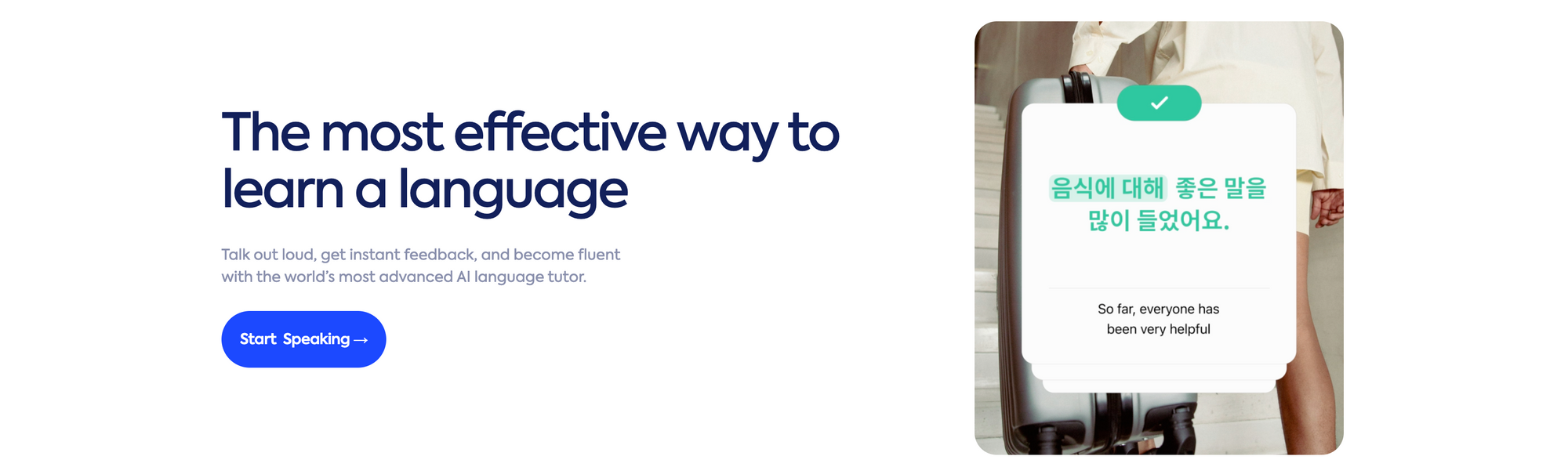
Speak offers a more polished experience than many AI Portuguese apps, with engaging roleplay scenarios and a tutor feature for grammar questions. It works well for beginners wanting structured practice, though the feedback lacks depth and the subscription tiers can be confusing.
Advantages:
- Polished interface with well-paced beginner content and helpful pronunciation videos.
- Clear, natural-sounding Portuguese voices with decent speech recognition.
- Grammar tutor feature lets you ask specific questions and request custom lessons.
- Engaging roleplay scenarios with cultural context (like ordering at a café or making plans with friends).
Disadvantages:
- Limited dialect options (not much European Portuguese if you prefer that variant).
- Feedback is brief and doesn't provide the depth needed for real improvement.
- Subscription tier structure is confusing, with unclear limits on AI lessons.
- Limited variety in lesson types - it gets repetitive at higher levels.
- No spaced repetition system for vocabulary retention.
Pricing: Varies by country. Premium Plus (unlimited custom lessons) costs significantly more than the base tier. The distinction between tiers wasn't clear at signup.
Read a full Speak review here.
#3: Univerbal
Best for: Folks Who Want a Gamified App
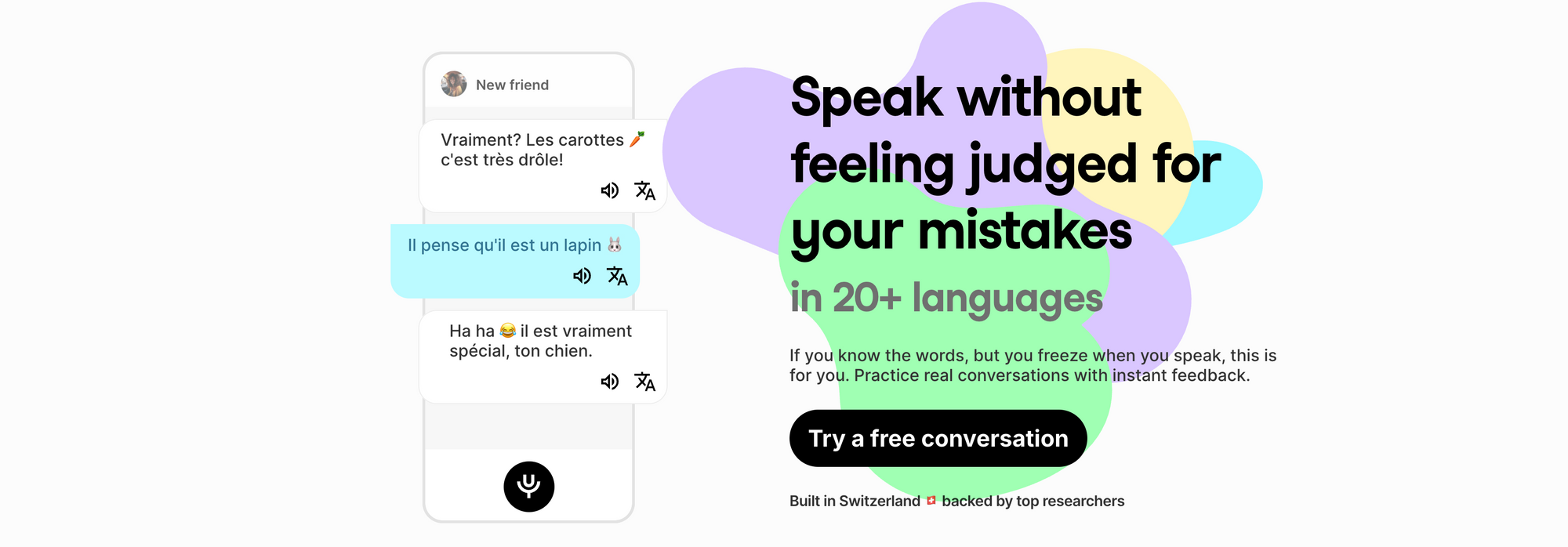
Univerbal is a Swiss AI language learning app (previously called Quazel) that focuses on conversation practice through structured scenarios.
Advantages:
- Personalized curriculum based on your interests and goals.
- Progression system that adapts as you improve your skills.
- Mobile app makes it convenient to practice Portuguese on the go.
- Wide variety of roleplay scenarios covering real-life situations (travel, work, daily life).
Disadvantages:
- No clear spaced repetition system for vocabulary retention.
- Conversations feel more rigid and scenario-based rather than flexible and open-ended.
- Voices sound more robotic and less natural compared to Langua's human-cloned voices.
- Transcription can be buggy - during my testing, it sometimes stopped recording mid-sentence.
- Limited ability to have spontaneous discussions outside the preset roleplay topics.
Pricing: $10-20/month
#4: ChatGPT
Best for: Folks Who Want to Learn for Free
You've probably heard of ChatGPT since it's the most well-known AI tool. While it's impressive technology that can work as an AI Portuguese tutor, it's not specifically designed for language learning. I've tested ChatGPT extensively for Portuguese practice and found both strengths and significant limitations.

Advantages:
- Audio mode feels very real and lets you interrupt the AI
- You can ask it to help you practice conversation or request grammar corrections
- Free version available for everyone
Disadvantages:
- You can't read while listening (unlike Langua). When you turn on audio mode, you can't see the text, which makes it harder to follow along.
- It's not built for language learning - I had to keep asking for corrections instead of getting automatic feedback. There's no easy translation button either.
- No dialect selection available (Brazilian, European), so voices sound pretty generic.
- The free version limits your usage quite a bit.
- Recording often cuts off during natural pauses, since the voice detection isn't designed for learners who need time to form sentences.
- No suggested conversation topics for learning Portuguese. I had to come up with all the ideas, and the AI kept recommending the same themes - food and music. It gets repetitive quickly.
Pricing: $20/month for premium access, free (limited) version available.
#5: Praktika
Best for: Visual Learners Who Like Structured Paths
Praktika offers well-organized learning paths and animated avatars, but it falls short in some important areas. The lesson paths aren't flexible, feedback is minimal, and there's no system for retaining vocabulary long-term.
Advantages:
- Large library of conversation topics available for on-demand practice (around 140 topics).
- Beginner lessons include helpful scaffolding and guided questions.
- Conversations adapt well to your Portuguese level, especially at intermediate stages.
- Clean interface with clearly organized lesson paths.
Disadvantages:
- No long-term vocabulary reinforcement or spaced repetition system.
- Learning paths are rigid - if you change your goal, you lose your progress.
- Very limited customization options compared to more flexible alternatives like Langua.
- Feedback is limited and easy to miss during conversations.
- Animated avatars can be distracting, with no option to turn off the visuals.
Pricing: Requires a 3-month minimum subscription with no monthly option. Pricing varies by country. Single tier includes all features with no add-ons.
Read our full Praktika review here.
Common Questions Related to Learning Portuguese with AI
What are the most effective ways to use AI for learning Portuguese?
AI can help with multiple aspects of language learning, including conversation practice, grammar corrections, and vocabulary building. In my experience, AI platforms like Langua and ChatGPT are incredibly valuable for improving Portuguese speaking skills through interactive conversations and instant feedback.
How can I integrate AI into my Portuguese learning routine alongside other resources?
AI language learning tools work great as part of your Portuguese learning toolkit, but they work best when combined with other resources like textbooks, language exchange partners, and human tutors. Use AI for targeted practice like conversation or reading transcripts, while also seeking out real-world language use and feedback from native speakers.
If I can learn Portuguese with AI, do I no longer need a tutor?
The short answer is no, relying only on AI Portuguese tutors isn't the best strategy. The longer answer... if you can afford it, I recommend combining human tutoring with AI conversation practice. Human tutors offer warmth, accountability, and encouragement that AI can't replicate. They also understand language nuances better and provide personalized feedback. AI, on the other hand, is excellent for quick practice sessions whenever you have time. It also gives you exposure to many different conversation scenarios. The combination of both creates a well-rounded and effective Portuguese learning experience.
What should I look for when choosing an AI tool for learning Portuguese?
When picking an AI Portuguese teacher app, consider factors like voice recognition quality, how natural the speech sounds, the range of conversation topics and exercises, and how well it personalizes to your needs. Look for tools that offer interactive features and provide explanations with examples for grammar and vocabulary. Also check whether they offer your preferred dialect (Brazilian vs European Portuguese). Reading user reviews and trying free trials can help you figure out which AI tool fits your learning style and goals best.
Curious whether you can learn to speak Portuguese using AI? I encourage you to check out Langua here and create a free account.
Curious about learning other foreign languages using AI? See more:
Learn English with AI | Learn Italian with AI | Learn French with AI | Learn German with AI | Learn Japanese with AI | Learn Chinese with AI | Learn Spanish with AI