TalkPal Review: Is It Worth Subscribing in 2026?
The Bottom Line
TalkPal offers AI conversation practice across 57+ languages with multiple practice modes including roleplays, debates, and photo descriptions. After testing it in French and Spanish, I found the variety impressive but the content surprisingly shallow.
Pricing is affordable. But the voices are robotic, the sentences used tend to be too simple if you're not a beginner, there are no grammar lessons, and the depth of feedback is extremely limited. For learners who want more realistic conversations, structured progression and meaningful feedback, Langua is a better choice.
Overall rating: ⭐⭐⭐ 3 stars out of 5
In-Depth TalkPal Review
Below, you'll find a detailed look at TalkPal's performance across the core areas that matter most: conversation quality, audio and speech recognition, lesson design, feedback, vocabulary tools, and grammar support.
But first, here's a quick overview of the app's strengths and weaknesses.
TalkPal Pros & Cons
Pros
- Multiple practice modes including chat, roleplay, debate, character, photo, and sentence building.
- Pronunciation scoring is helpful, with color-coded word-level feedback.
- Affordable pricing, especially on the annual plan.
- Clean interface with well-organized course structure mapped to CEFR levels.
Cons
- Voices sound rather robotic - less human than on other apps.
- Content is shallow: sentences are too simple for higher levels.
- No dedicated grammar lessons; grammar is only addressed incidentally.
- No post-lesson feedback summary; only a generic daily recap.
- Vocabulary images don't always clearly represent their target words.
- No spaced repetition for vocabulary review.
- Many less-common languages lack structured courses entirely, offering only freeform modes.
Conversation Quality & AI Intelligence
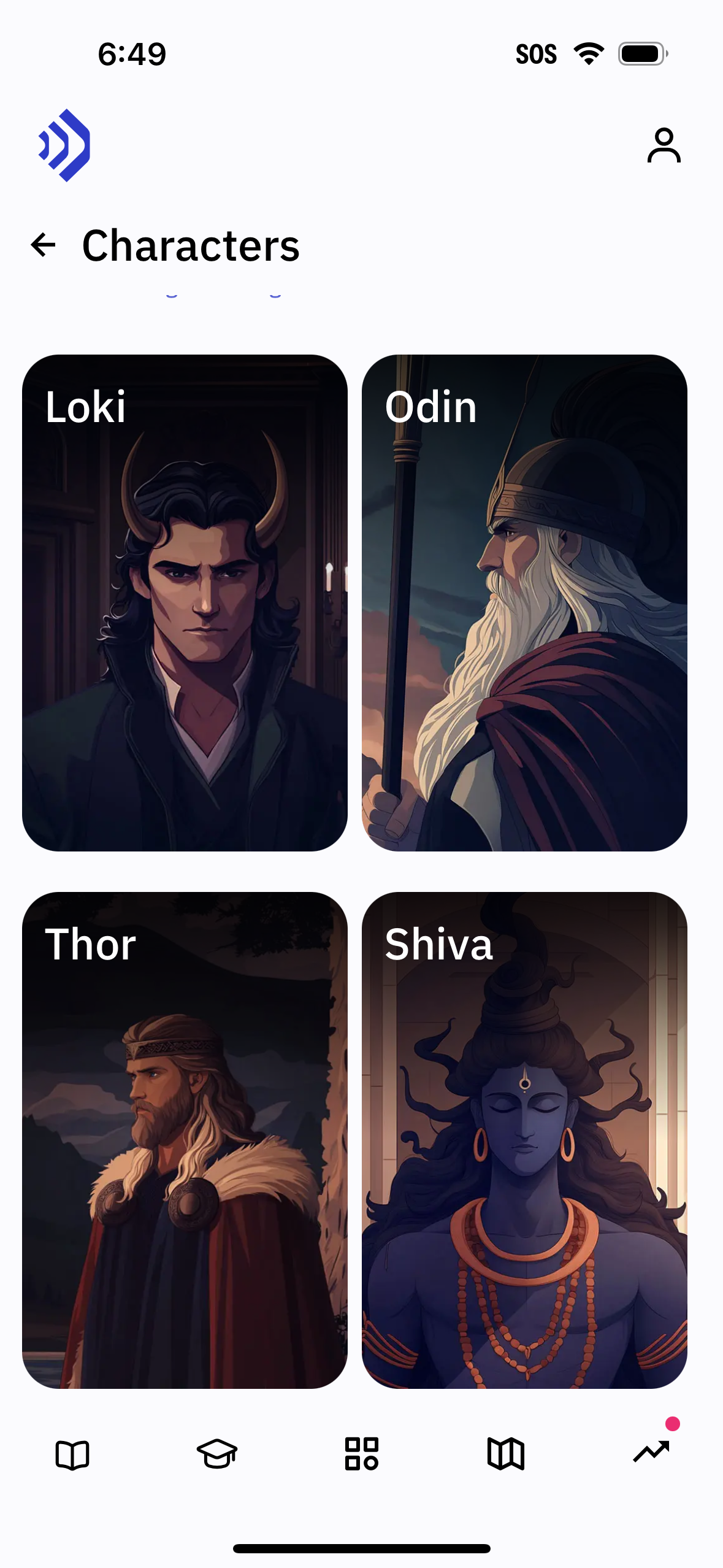
TalkPal's standout feature is its variety of practice modes. Beyond standard AI conversations, you can debate topics, chat with fictional and historical characters, describe AI-generated photos, practice individual sentences, and make audio-only "phone calls" with the AI.
The roleplay and character modes provide a change of pace. In debate mode, you argue for or against topics like "Is fast food acceptable?" or "Should school uniforms be required?"
The AI itself is decent but not exceptional. In French and Spanish, conversations were functional but not adaptive. The AI rarely adjusted its complexity based on my performance, and often ignored advanced structures I tried to use.
The variety of modes is TalkPal's greatest strength, but no single mode goes particularly deep. If you enjoy switching between different practice types to keep things fresh, TalkPal delivers. But if you want conversations that feel like talking to a human and adapt to your level, Langua's AI is more flexible and context-aware.
Audio Quality & Speech Recognition
TalkPal's voices are synthetic but serviceable. They're clear enough for comprehension, though they lack the expressiveness and natural rhythm of a real speaker.
TalkPal's pronunciation scoring is better than most competitors. The app provides a numerical score out of 100 for spoken sentences and highlights individual words that were slightly off in a different color. However, the scoring lacks actionable guidance. If a word is flagged as mispronounced, the app won't tell you what you did wrong or how to fix it.
Still, TalkPal's pronunciation detection is more accurate than Pingo or Jumpspeak.
Structured Course & Lesson Design
TalkPal's structured course is organized around CEFR levels, from A1 through C2. Each level is divided into two sub-levels with 60 exercises mixing sentence mode, word mode, and other activities.
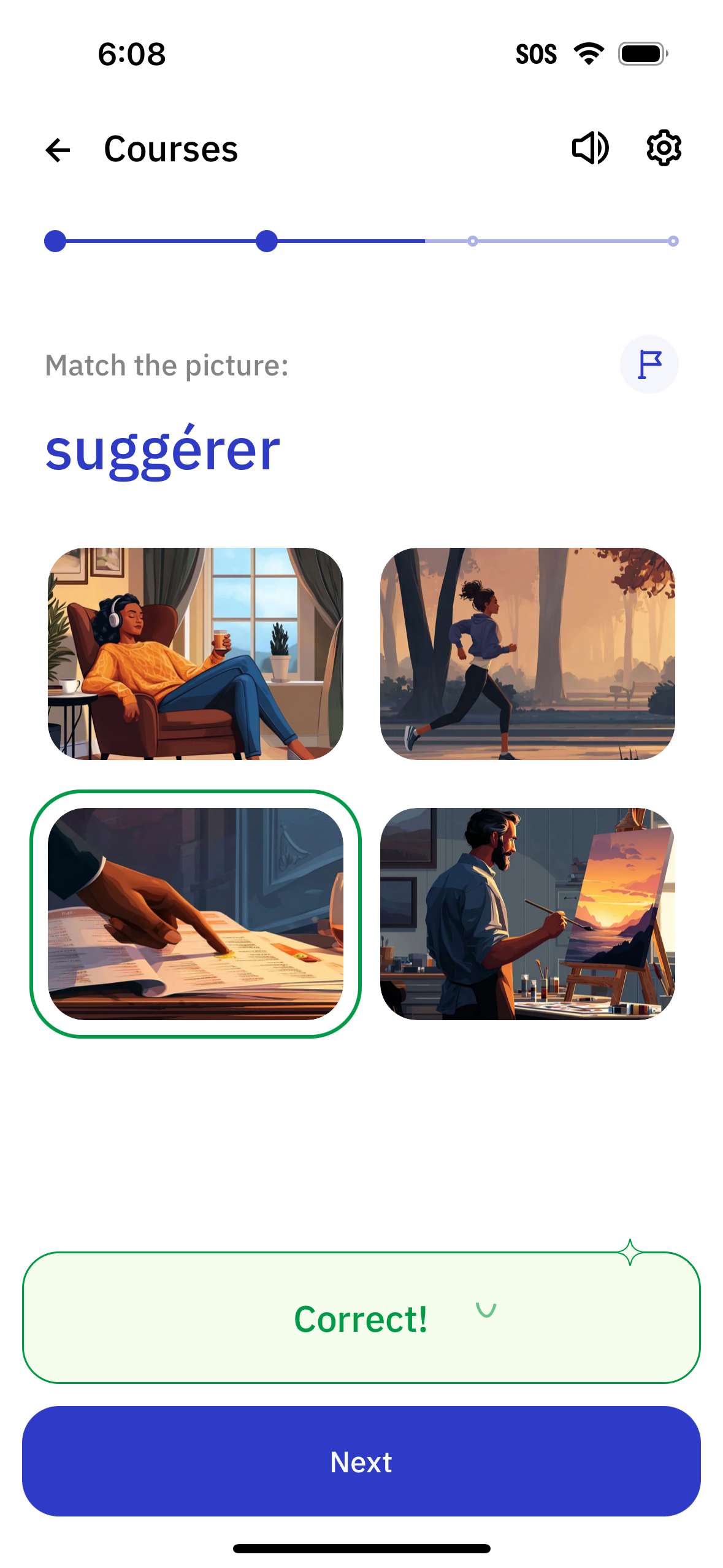
Exercises include sentence-building, picture-based vocabulary matching, sentence repetition, and guided conversations.
However, the content itself doesn't scale well with the levels. Even at the highest levels, the sentences remain fairly simple. Vocabulary difficulty increases as you advance, but sentence structures don't become more complex. The CEFR level calibration felt off. When I selected intermediate, the material didn't always align with B1 or B2 expectations. At C1 and C2, you'd expect to encounter varied verb tenses, subordinate clauses, and nuanced expressions, but the material rarely reaches that level of sophistication.
TalkPal's vocabulary images don't always clearly represent their target words. You end up memorizing arbitrary picture-word associations rather than learning actual concepts.
TalkPal's 57+ language claim comes with a caveat. Major languages like French, Spanish, Chinese, and Arabic get structured learning paths and level-specific courses. Many less common languages don't. Languages like Greek, Hebrew, Afrikaans, Lao, and Irish only offer freeform modes: chat, call, roleplays, characters, debates, and photo descriptions. No structured course.
If you're learning one of these languages, TalkPal is more of an open-ended conversation tool than a structured learning app.
Feedback Quality & Depth
TalkPal's feedback system has some useful elements but ultimately falls short. During conversations, the app provides inline corrections marked with an orange exclamation mark. Tapping this reveals a correction or suggestion.
The problem is that there's no summary or analysis after you finish a lesson. When a conversation ends, it simply ends. There's no breakdown of what you did well, what patterns of errors appeared, or what you should focus on next.
The app offers a daily feedback summary with an overview of your practice and "problematic topics." The feedback is generic and motivational rather than specific and actionable.
Corrections are reactive rather than proactive. If you avoid difficult grammar by sticking to simple sentences, the app won't push you toward more complex structures.
Langua, by comparison, provides detailed post-conversation feedback with categorized error lists, and its AI actively encourages learners to stretch beyond their comfort zone.
Vocabulary-Building Tools
TalkPal introduces vocabulary through word-mode exercises, picture matching, and conversations. You encounter words in different contexts.
Word-mode exercises are straightforward: you see a word and its translation, hear the pronunciation, and practice using it. Picture-matching exercises add a visual element, though the images don't always aid comprehension.
There's no spaced repetition system. Words don't reappear strategically in later lessons, there's no dedicated review mode, and no way to track which words you've mastered. Without systematic review, learners are likely to forget much of what they encounter.
Grammar Support
TalkPal does not include dedicated grammar lessons. The app's approach is entirely based on practice and exposure: you're expected to absorb grammar naturally through conversation and exercises.
You can ask the AI to explain grammatical concepts, but it often asks you to provide examples first. This works if you already understand the topic, but not if you're encountering it for the first time.
For example, if you're learning French and have never heard of the conditional mood, you'd likely never think to ask about it, and TalkPal would never bring it up. The app only addresses grammar reactively through inline corrections, and only for structures you attempt to use. If there are gaps in your knowledge, TalkPal won't help you discover them.
Langua handles this more effectively by recommending grammar-focused conversational drills based on your errors, and by letting you design custom lessons around specific structures.
TalkPal Pricing
TalkPal's pricing is reasonably affordable. There are three options:
- Free (Basic): Limited to 10 minutes of practice per day.
- Premium Monthly: $9.99 per month. Unlocks unlimited practice across all modes.
- Premium Annual: $4.99 per month billed annually ($59.88 per year). The best value if you plan to use the app long-term.
At under $5 per month on the annual plan, TalkPal is cheaper than most competitors. The pricing is simple with no confusing upsells or hidden limits, and includes a two-week free trial.
For casual learners who want variety on a budget, TalkPal represents reasonable value. For serious learners, the question is whether the quality of the app justifies even the modest cost.
TalkPal Alternatives
Best Overall Alternative: Langua
For learners who want a more powerful app with more human AI, deeper conversations and structured feedback, Langua is the strongest alternative to TalkPal. While TalkPal offers more variety in practice modes, Langua excels in the areas that matter most for long-term progress:
- Conversations are more adaptive and context-aware, adjusting to your actual proficiency.
- Post-conversation feedback is detailed and actionable, with categorized error lists.
- Grammar topics are recommended based on your real mistakes, not left for you to discover.
- Vocabulary review uses spaced repetition and integrates saved words into future lessons.
- Custom prompts allow you to design focused lessons on any topic.
Langua is competitively priced and offers more value for learners who want to make real progress.
Good For Complete Beginners: Speak
Speak offers a more structured and polished experience than TalkPal, with clear beginner courses, roleplay scenarios, and a helpful Tutor feature. Its voices are smoother and more natural than TalkPal's. However, Speak's feedback is limited, its content gets repetitive at higher levels, and its pricing is less transparent. It's a better fit for beginners who want a guided experience, but it shares many of TalkPal's weaknesses in grammar and vocabulary tracking. You can read my in-depth Speak review here.
Free Option (With Limitations): ChatGPT
ChatGPT can serve as a free conversation partner, but it lacks specialized features for language learning:
- No structured lessons, conversation scenarios, or curriculum.
- Doesn't correct your mistakes unless you specifically ask it to.
- No integrated feedback, progress tracking, or pronunciation assessment.
- Speech detection can cut you off mid-sentence.
It's best suited for advanced learners who want open-ended conversation practice and don't mind managing their own learning.
Final Verdict
TalkPal's greatest strength is variety. The range of practice modes is impressive, and the affordable pricing makes it easy to try. If you're the kind of learner who gets bored doing the same type of exercise over and over, TalkPal's rotating mix of debates, roleplays, photo descriptions, and sentence drills will keep things interesting.
But variety alone doesn't build fluency. The content remains shallow even at advanced levels, grammar is addressed only reactively, and the feedback system doesn't give you the detailed, actionable guidance you need to improve systematically. The vocabulary tools lack spaced repetition, and the level calibration doesn't always align with CEFR standards.
TalkPal is a reasonable choice for casual learners on a budget who want a fun, low-commitment way to practice. But for anyone serious about becoming fluent, an app with deeper content, proactive grammar support, and meaningful feedback, like Langua, will serve you much better in the long run.