The best AI Spanish learning apps: tested & reviewed
As a Spanish teacher, I'm always looking for tools that can help my students practice between our lessons. I've spent countless hours testing AI apps that promise to help learners speak Spanish, and I've found that some are considerably better than others.
AI is going to change the way we learn languages. But with so many options available, it can be overwhelming for students to choose.
In this article, I'll share the tools I recommend most for Spanish conversation practice with AI, based on my experience seeing what actually helps students improve. I'll get straight to the point, highlighting the pros, cons, and pricing.
The Best Tools for AI Spanish Conversation Practice
#1: Langua
Best for: Motivated Learners of Spanish
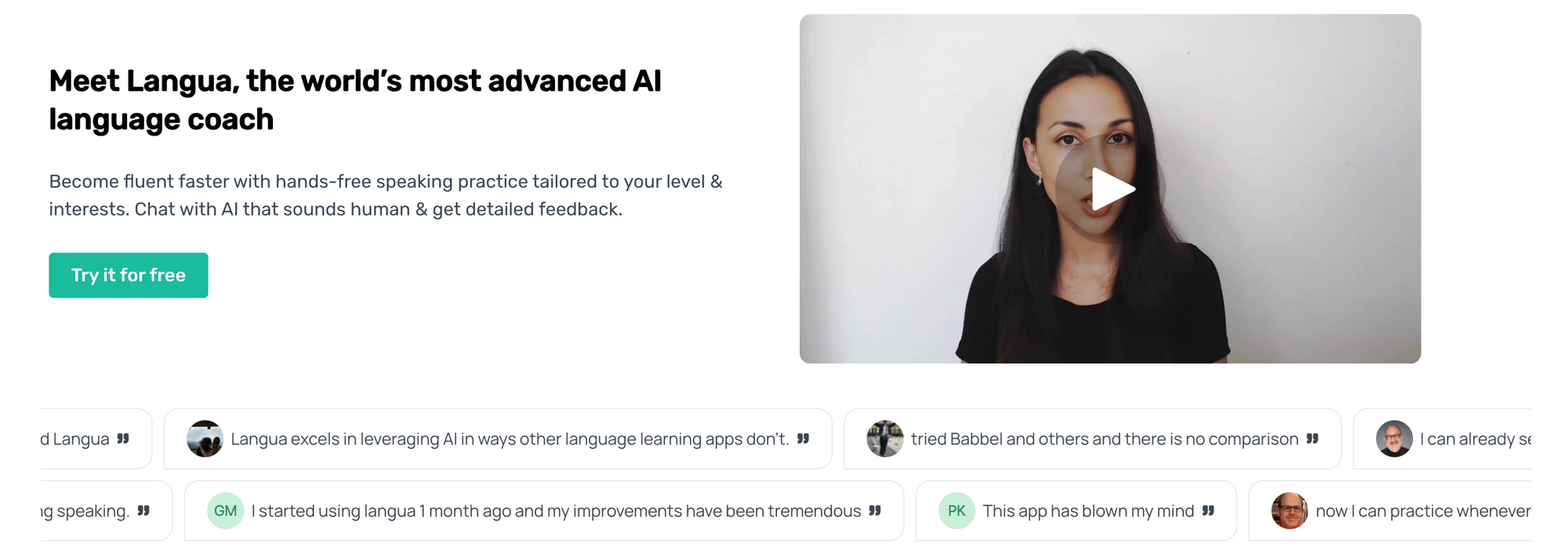
Langua is a powerful AI platform designed for learners who want to take their Spanish conversation skills to the next level, whilst also having the option to learn through listening, reading and flashcards.
Pros:
- Offers a wide range of conversation options designed for language learners: practical roleplays, controversial debates, discuss your interests, etc.
- Unlike other apps I tried, you'll feel like you're talking with a human rather than a robot. This takes some getting used to! Many of the voices are cloned from YouTubers in the language learning space who Langua has partnered with.
- Get instant corrections and see explanations for these. This is important as it gives you a deeper understanding of your mistakes. You can even access a detailed feedback report after each chat.
- Speak in your native language when stuck, and the AI will usually still understand you (useful for A1-A2 Spanish learners)
- Also offers podcasts and videos with interactive transcripts generated by AI. These highlight each word as it's spoken, making the content more understandable. Then you can translate words and sentences in 1 click and learn them via spaced repetition flashcards. You can even generate AI stories that incorporate your saved words.
- Available on any device - desktop (via website) or tablet/mobile via apps: iOS (Apple) | Android (Google Play)
Cons:
- The AI occasionally fails to catch errors - a common limitation I've observed across all available AI models.
- Sometimes your speech may be corrected when transcribed (preventing you from being corrected). However, again this is a problem with all AI models and Langua allows you to switch between the best available models.
- Can be tricky if you're a complete beginner (Langua has tools and a custom course for beginners but having conversations is always hard as a beginner)
- Currently 'only' available in 23 languages (more are being added every month, so this may have changed by the time you read this).
Pricing: $12 to $29/month (depending on your subscription type). Offers a multi-day free trial to test the website and/or app and see if it's for you.
You can create a free account on Langua and explore it here.
#2 ChatGPT
Best for: Folks Who Want to Learn for Free
You've probably heard of ChatGPT as it's the most well-known AI tool. While it's an incredible technology that can be adapted to be an AI Spanish tutor, it's not specifically designed for language learning. I tested ChatGPT's capabilities for Spanish practice extensively, and while it has its merits, there are many limitations.

Pros:
- Free version available
- You can ask the AI to help you practice conversation, or request grammar corrections
- Audio mode feels very real and allows you to interrupt the AI.
Cons:
- It is not specifically designed for language learning. I had to keep asking the AI to correct me, it's not automatic. And there's no button to easily get translations.
- The system often cuts off recordings during natural thinking pauses, as its speech detection isn't designed for learners who need time to form sentences.
- No option to select the dialect you want (Mexican, Castilian, Argentine, etc.), so the voices will usually sound fairly generic.
- There are no suggested chat options for learning Spanish. I had to come up with all the ideas and the AI kept recommending the same topics - food and music. It gets repetitive quickly.
- Unable to read as you listen (unlike Langua). If you turn audio mode on, you cannot see the text. This makes it harder to follow.
- The free version limits your usage a lot.
Pricing: $20/month for the paid version, free (limited) version available.
#3: Univerbal
Best for: Folks Who Want a Structured and Gamified App
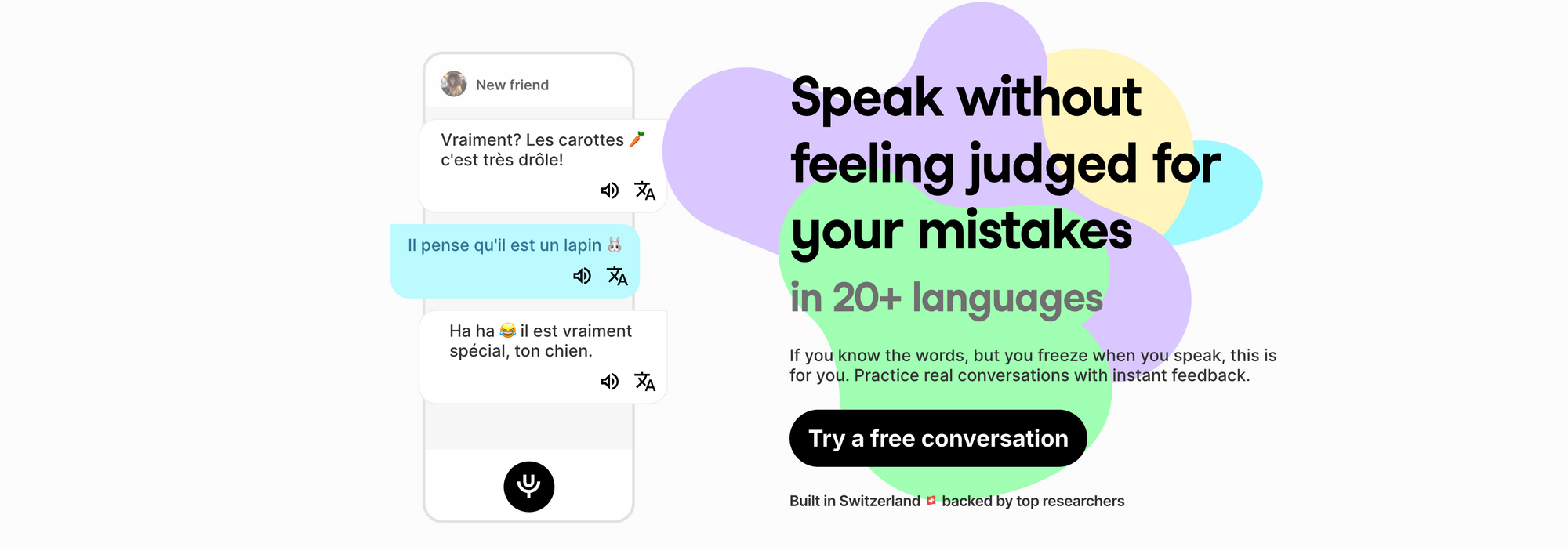
Univerbal is a Swiss AI language learning app (formerly called Quazel) that focuses on conversation practice through structured scenarios.
Pros:
- Mobile app makes it convenient to practice Spanish on the go.
- Wide variety of roleplay scenarios covering real-life situations (travel, work, daily life).
- Structured progression system that adapts to your level as you improve.
- Personalized curriculum based on your interests and goals.
Cons:
- Voices sound more robotic and less natural compared to Langua's human-cloned voices.
- Transcription can be buggy - in my testing, it sometimes stopped recording mid-sentence.
- Conversations feel more rigid and scenario-based rather than flexible and open-ended.
- Limited ability to have spontaneous discussions outside of preset roleplay topics.
- No clear spaced repetition system for vocabulary retention.
Pricing: $10-20/month
#4: Speak
Best for: Beginners Who Want Structured Practice
Speak offers a more polished experience than many AI Spanish apps, with engaging roleplay scenarios and a tutor feature for grammar questions. It works well for beginners wanting structured practice, though the feedback lacks depth and subscription tiers can be confusing.
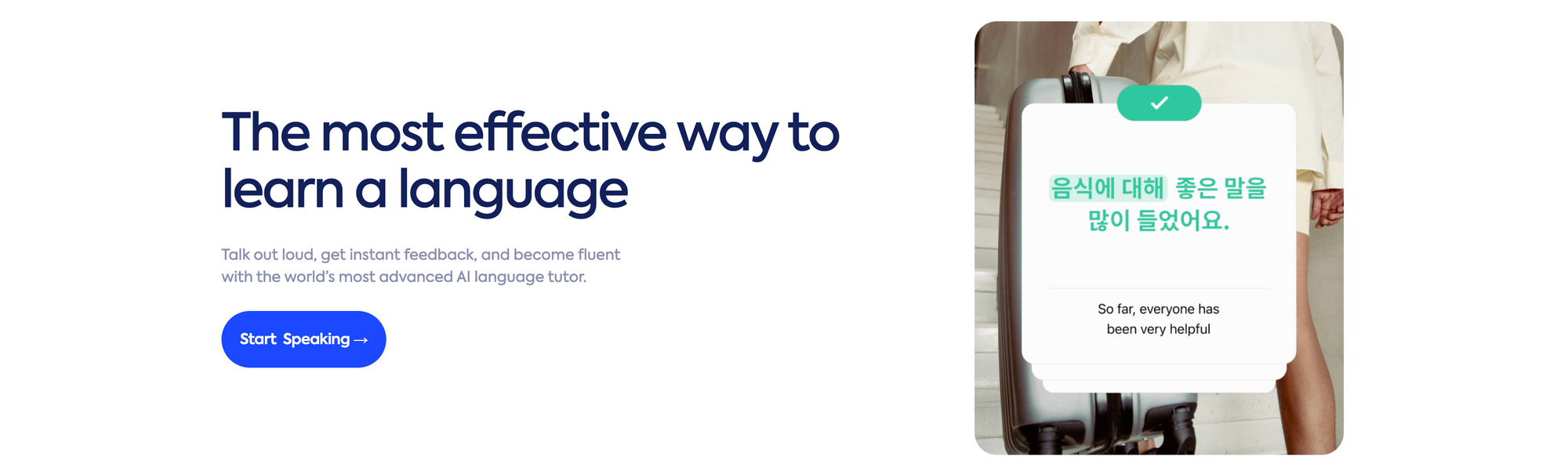
Pros:
- Clear, natural-sounding Spanish voices with decent speech recognition.
- Engaging roleplay scenarios with cultural context (like ordering at a café or making plans with friends).
- "Speak Tutor" feature lets you ask grammar questions and request custom lessons.
- Polished interface with well-paced beginner content and helpful pronunciation videos.
Cons:
- Feedback is brief and doesn't provide the depth needed for sustained improvement.
- Limited variety in lesson types - gets repetitive at intermediate and advanced levels.
- Limited control over Spanish dialect selection (no clear option for Mexican, Colombian, etc.).
- No spaced repetition system for vocabulary retention.
- Premium tier structure is confusing, with unclear limits on AI lessons.
Pricing: Varies by country. Premium Plus (unlimited custom lessons) costs significantly more than the base Premium tier. The distinction between tiers wasn't clear at signup.
Read our full Speak review here.
#5: Praktika
Best for: Visual Learners Who Like Structured Paths
Praktika features organized lesson paths and animated avatars, but falls short in several important areas. The learning paths are inflexible, feedback is minimal, and there's no system for retaining vocabulary long-term.
Pros:
- Conversations adapt reasonably well to your Spanish level, particularly at intermediate stages.
- Clean interface with clearly organized lesson paths.
- Beginner Spanish lessons include helpful scaffolding and guided questions.
Cons:
- Rigid learning paths - if you change your goal, you lose your progress.
- Feedback is limited and easy to miss during conversations.
- Animated avatars can feel distracting or uncanny, with no audio-only option.
- No spaced repetition or vocabulary tracking system.
- Very limited customization compared to competitors like Langua.
Pricing: Requires minimum 3-month commitment with no monthly option. Pricing varies by country. Single subscription tier includes all features with no upsells.
Read our full Praktika review here.
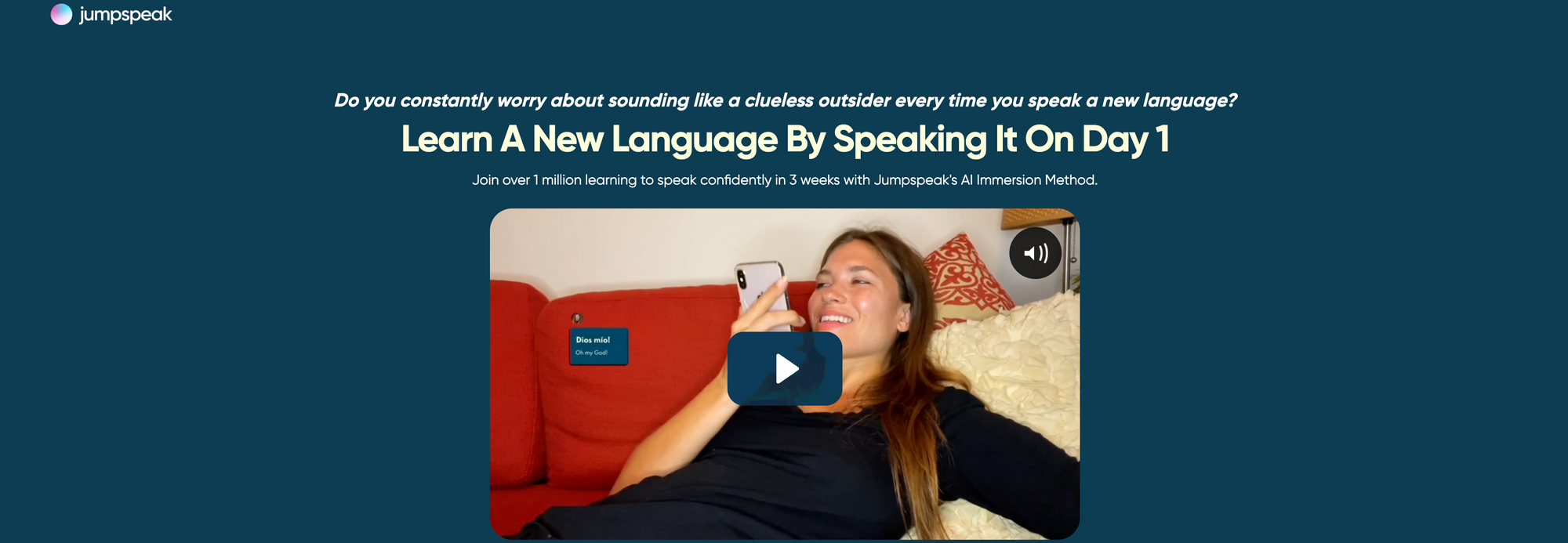
Lastly, a heads up: many AI apps for Spanish run Instagram ads that massively overpromise. Our review of Jumpspeak shows exactly what can go wrong—robotic audio, weak feedback, and confusing pricing that doesn't match the marketing hype.
Common Questions Related to Learning Spanish with AI:
How can AI be used effectively for language learning?
AI can be used for various aspects of language learning, such as conversation practice, grammar corrections, and vocabulary acquisition. In my experience, AI tools like Langua and ChatGPT have been invaluable for improving my Spanish speaking skills through interactive conversations and instant feedback.
What are the limitations of AI Spanish tutors?
While AI has made significant advancements in language learning, it still has limitations. AI may not always catch every grammatical error or provide the same level of nuance and context as a human tutor. I've encountered instances where the AI missed corrections or provided generic responses. It's important to keep in mind that AI is a tool to supplement your learning, not a complete replacement for human interaction.
If I can learn Spanish with AI, do I no longer need a tutor?
The short answer is no, only speaking Spanish with an AI Spanish tutor is not the best strategy. The longer answer... if you can afford a tutor, I recommend combining it with AI conversation practice in Spanish. A human tutor offers warmth, accountability, and encouragement that AI cannot replicate. They can also better understand the nuances of the language and provide personalized feedback. AI, on the other hand, is an excellent tool for quick practice sessions whenever you have a moment free. It also gives you exposure to a variety of conversation scenarios. The combination of both can lead to a well-rounded and effective Spanish learning experience. If you're interested in getting a tutor, you can find talented folks on our platform, LanguaTalk. We accept the top 5% of applications, ensuring high standards versus other sites.
Curious whether you can learn to speak Spanish using AI? I encourage you to check out Langua here and create a free account.
Interested in learning other languages with AI? See more:
Learn English with AI | Learn Italian with AI | Learn French with AI | Learn German with AI | Learn Japanese with AI | Learn Chinese with AI