Speak vs Duolingo (2026): Which App Actually Gets You Speaking?
Duolingo is great at getting you to open a language app every day. Speak promises something different: that you'll be talking out loud from your first lesson.
Both are popular, both use AI, and both cost money once you want the full experience. So which one is worth your time? We compared Speak vs Duolingo on what matters most if your goal is to hold a real conversation: how much you speak, how useful the feedback is, how far each app can take you, and what it costs.
The short answer
- Choose Duolingo if you want a free, low-pressure daily habit, or you're learning a language Speak doesn't teach. It covers 40+ languages, and the full course is free with ads.
- Choose Speak if you're learning Spanish, French, Japanese, Korean, Italian or Chinese, you freeze when you have to speak, and you're happy to pay for structured speaking practice.
- Consider Langua, if you're an intermediate learner wanting engaging conversation practice with detailed feedback, or you're a beginner looking for a guided conversation course that gives you the building blocks for communication in daily life and when travelling.
Duolingo vs Speak vs Langua compared
| Feature | Duolingo | Speak | Langua |
|---|---|---|---|
| Best for | A free daily habit and trying lots of languages | Speaking out loud from day one in one of its six languages | Lots of speaking practice with detailed feedback, beginner to advanced |
| For beginners | Short, low-pressure lessons with a strong habit loop | Strong: short video lessons, drills and guided Q&A | Strong: guided conversation course for A1 and A2, plus roleplays with suggested replies |
| Intermediate and above | Nine big courses now reach B2; most others stop around A2 | Spanish and French go further; Japanese, Korean and Italian are beginner only for now | A standout: built for deep & challenging conversations with detailed feedback |
| AI conversation | Video Call with Lily, in six languages, now included with most new Super plans | Roleplays with set goals and Free Talk on any topic | Engaging conversations about your interests, plus roleplays, debates and hands-free Call Mode |
| Corrections | Right or wrong per exercise; Explain My Answer, now free | Short summary after each roleplay; a study plan for frequent mistakes on Premium Plus | Subtle or explicit, written or spoken, with a report after each chat |
| Vocabulary and grammar | Word and mistake practice; grammar mostly inferred, with tips | Phrases taught in context and Smart Review; no structured grammar lessons | Saved words, spaced-repetition flashcards and grammar drills based on your mistakes |
| Pronunciation | Read-aloud exercises, checked leniently | Checked on every answer, but lenient; Pronunciation Coach for English learners only | Limited for now |
| Voices | Character voices | Clear and natural, no choice of accent | Cloned from real native speakers, several dialects, adjustable speed |
| Languages | 40+ | 6 for English speakers, plus English | 20+ |
| Platforms | iOS, Android and web | iOS and Android only | Web, iOS and Android |
| Free option | Full course free, with ads and energy limits | 7-day free trial | Free trial |
| Price (US) | Super $12.99 a month, or $83.99 to $95.99 a year; Family $119.99 a year | Premium $17.99 a month or $83.99 a year; Premium Plus $39.99 a month or $164.99 a year | From $12.50 a month (Standard, annual) to $29.99 a month (Unlimited, monthly) |
Prices from each app's US App Store listing. They vary by country, platform and promotions.
How we tested
Several members of our team and several tutors from the LanguaTalk platform used both apps the way a normal learner would: working through lessons, speaking in roleplays, making mistakes on purpose and checking how each app corrected them. We also drew on our in-depth Speak app review, tested in French and Spanish, and our guide to Duolingo alternatives.
Both apps change often, so we checked features, prices and plan details against Speak's and Duolingo's own help pages, blogs and App Store listings. Where a Duolingo vs Speak difference depends on your plan or your language, we say so.
How Duolingo works in 2026
Duolingo teaches through a single path of short lessons. Most exercises ask you to tap, match or type: choose the right picture, arrange a sentence from a word bank, match pairs or type what you hear. Stories, listening practice and review sessions sit along the same path.

What it does well is habit. Streaks, leagues and reminders make it easy to practice for five minutes a day, and plenty of learners keep a streak going for years. The free version is generous: you can do the whole course without paying, although free users now have an energy meter that drains with each exercise and refills over time, with ads or with gems.
Three changes in 2026 matter for this comparison:
- Explanations are now free. Explain My Answer, which tells you why an answer was wrong, used to be part of Duolingo Max. It has been free for all learners since January 2026.
- Some courses go further. Nine courses, including Spanish, French, German, Japanese and English, now teach up to B2. Most of the other 40-odd languages still stop around A2 or lower.
- AI conversation is moving to Super. Video Call lets you have a spoken conversation with Lily, one of Duolingo's characters. It used to require Max, the top plan. Duolingo says most new Super subscribers now get it, and that existing subscribers will get it later this year. Video Call is available for learners of English, French, Spanish, Italian, German and Portuguese.
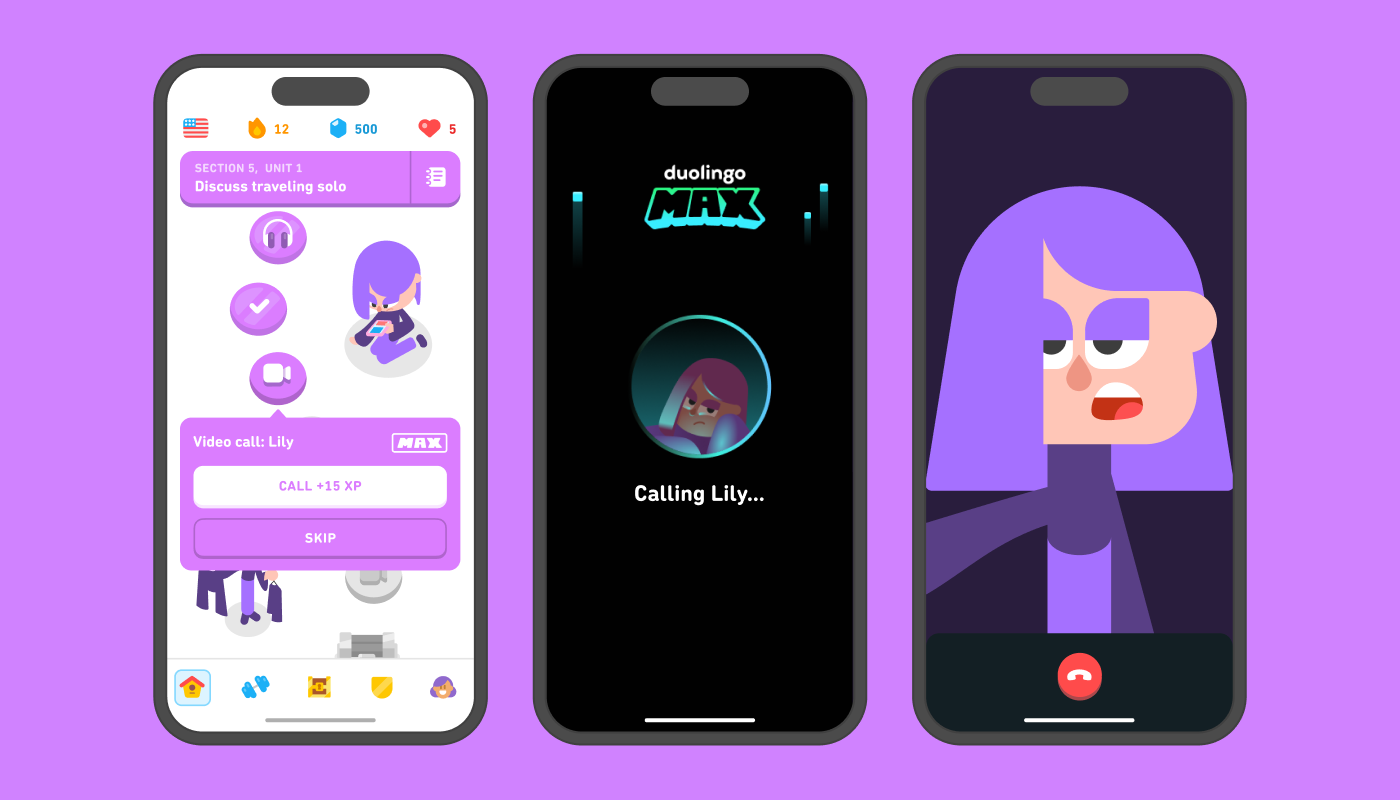
The limitation is that most of your time in Duolingo is still spent recognizing language rather than producing it. Speaking exercises mostly ask you to read a sentence aloud, and they're checked leniently. Video Call is a real step forward, but it's one feature inside an app built around tapping answers.
How the Speak app works
Speak is built around speaking. Its method has three steps: learn useful phrases, practice saying them until they're automatic, then use them in a conversation with its AI tutor. You speak in almost every exercise.
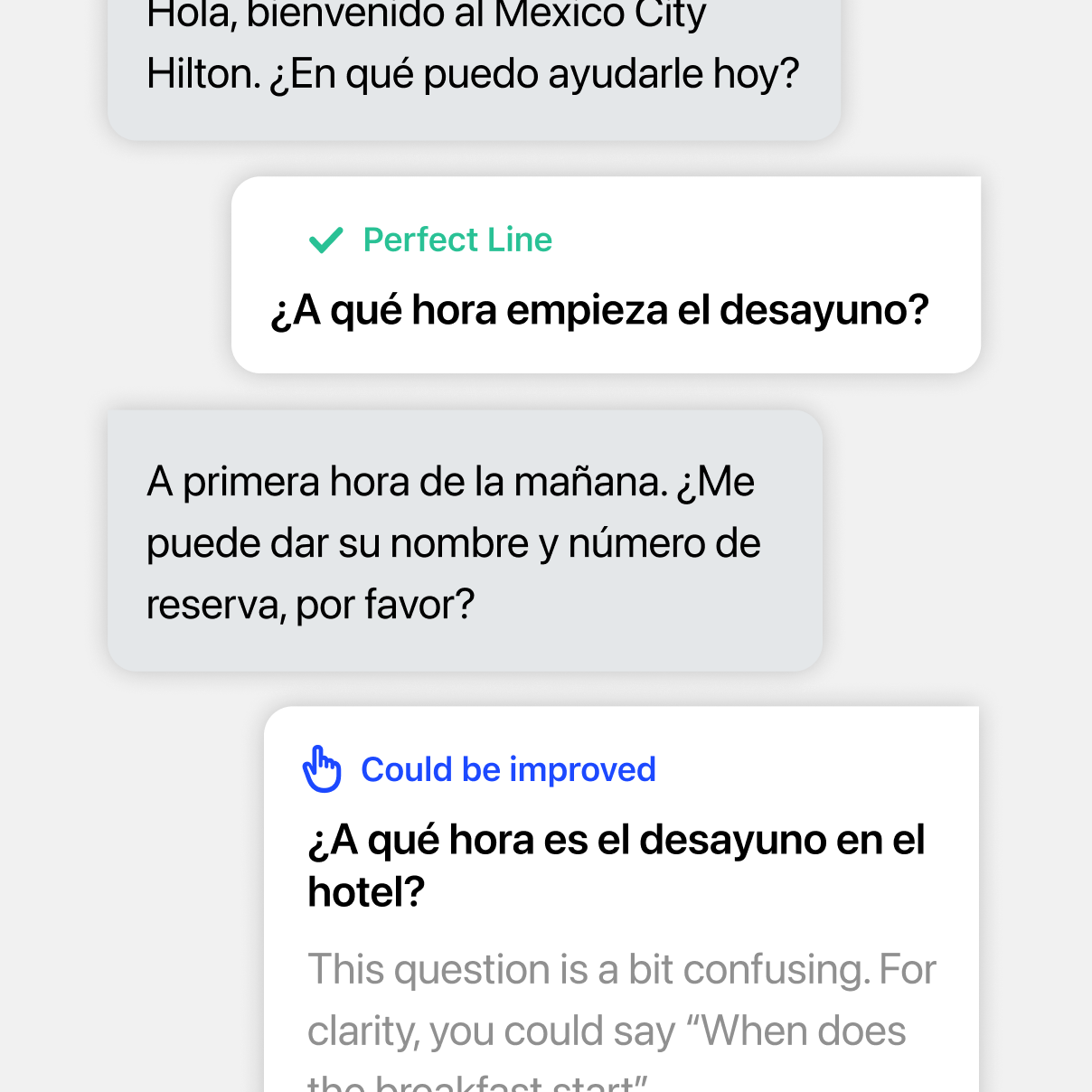
At beginner level, lessons often start with a short video from a bilingual instructor, followed by speaking drills, a vocabulary builder and a guided Q&A with the AI tutor. Later units add roleplays, where you complete three goals in a scenario such as ordering at a café. Free Talk lets you set your own topic and roles.

Speak has added more personalization since our original review. Smart Review works like spaced repetition, bringing back phrases from the course just before you're likely to forget them. Made For You lessons are generated from your goals and mistakes, and Premium Plus adds a study plan that targets your most frequent errors. You can also ask the Speak Tutor a grammar question, or ask it to build a lesson on a topic.
There are two paid plans, Premium and Premium Plus. Speak's pages describe the difference in a few different ways, and it isn't always clear at signup what the cheaper plan limits. Three things stood out in our testing:
- The speech recognition is lenient. Mispronounced words and even reversed word order could still get a perfect score in speaking drills. That makes practice feel smooth, but it can give you a false sense of progress.
- The feedback is brief. After a roleplay you get a short list of errors, and review lessons are mostly more drills.
- Lesson variety drops at higher levels. The beginner course is the most polished part of the app.
Speak teaches Spanish, French, Japanese, Korean, Italian and Chinese to English speakers, and English to speakers of 15 other languages. According to Speak's help centre, the Japanese, Korean and Italian courses are beginner only for now. The app works on phones and tablets, but not on a computer.
Speak vs Duolingo: head to head
Speaking practice
This is the biggest difference. In Speak, you speak in nearly every exercise, and the AI conversation is the core of the app. In Duolingo, speaking is one exercise type among many, and its AI conversation sits inside a paid plan.
If you mainly want to get used to speaking out loud, Speak gives you far more practice per minute. Neither app gives you much long, open-ended conversation, though: Speak's roleplays end once you complete the goals, and Duolingo's Video Calls are short. If you want longer, open conversations on topics you choose, with corrections as you go, consider Langua.
Feedback and corrections
Duolingo marks each answer right or wrong, and Explain My Answer now gives a short reason for free. Speak gives you a summary after each roleplay and can turn your mistakes into extra drills. If you want more detailed feedback, consider Langua. You choose how you're corrected, and after each chat you get a report on your mistakes, with explanations.
Both apps are lenient when they check your speech. If you mispronounce a word, neither is likely to stop you. That's worth knowing if you're relying on either one to tell you whether people will understand you.
Vocabulary and grammar
Duolingo is strong on recognition. You'll see a lot of words, and the practice section brings back ones you got wrong. Grammar is mostly something you work out from examples, with tips in the unit guides.
Speak teaches vocabulary inside full phrases, which is a sound approach, and Smart Review recycles those phrases. Both apps use a form of spaced repetition here. Duolingo times its practice sessions around the words you're likely to forget, and Speak does the same with its phrases. In both cases, though, you review what the course taught you, not words you picked up yourself.
Speak has no structured grammar course, but the Speak Tutor will explain a point if you ask. In our testing, those explanations were short.
Levels: beginners and beyond
For a complete beginner, both are easy starts. Speak's video lessons make the first few weeks feel guided, while Duolingo's short exercises are lower pressure.
Beyond the basics, it depends on your language. Duolingo's nine biggest courses now reach B2, but the content stays in the same game format. Speak's Spanish and French courses run past beginner level, though the lessons become more repetitive. If you're learning Japanese, Korean or Italian, Speak's course is beginner only for now.
Languages and platforms
Duolingo wins easily on choice, with 40+ languages and a web version. Speak covers six languages for English speakers and works only on iOS and Android.
Price
Duolingo is the clear winner if you don't want to pay: the core course is free. Super, which removes ads and energy limits, costs $12.99 a month or $83.99 to $95.99 a year in the US App Store (£12.49 a month in the UK, with several annual prices listed).
Speak has no free plan, only a 7-day free trial. In the US App Store, Premium costs $17.99 a month or $83.99 a year, and Premium Plus costs $39.99 a month or $164.99 a year. In the UK, that's £12.99 or £59.99 for Premium, and £29.99 or £124.99 for Premium Plus.
Motivation and habit
Duolingo was built to bring you back every day, and it's very good at it. Speak has streaks and leagues too, but they're a lighter part of the app. If you know you struggle to practice regularly, that counts in Duolingo's favor.
Should you pick Speak or Duolingo?
It depends on what's holding you back.
- You're a complete beginner and don't want to pay yet. Start with Duolingo. It's free, gentle and good for building the habit.
- You're a beginner who wants to speak from the start. Pick an app built for speaking. Speak's video lessons and drills work well here, and Langua's guided course gets you speaking from the first lesson while teaching the phrases you need for daily life and travel.
- You're stuck around A2 or B1. This is where both apps are weakest. You need longer conversations and more detailed feedback than either gives you.
- Your language isn't on Speak. Duolingo is the obvious choice of the two, as it covers far more languages.
- You want to study on a computer. Duolingo works on the web; Speak doesn't.
Can you use Speak and Duolingo together?
Many guides frame Duolingo vs Speak as an either-or choice, but some learners use both: Duolingo for vocabulary and a daily habit, and Speak for speaking practice. Speak itself suggests the two can complement each other.
The catch is cost and time. Paying for both Super and Speak Premium on annual plans comes to roughly $168 to $180 a year in the US, and you'd still have the same gap in both apps: neither offers much open conversation or detailed feedback once you're past the beginner stage. Before you pay for both, it's worth deciding whether Speak or Duolingo is really the tool you need, or whether a single app covers more of it.
The gap both apps share
Neither Speak nor Duolingo is designed for long, natural conversations once you have the basics. That's the stage where many learners stall: they know plenty of words, but can't yet follow a real conversation or explain what they think.
That's the gap we built Langua to fill. It's our AI language tutor: you can chat about your own interests, do roleplays or debate a topic, with voices cloned from real native speakers in a choice of dialects. You decide how you're corrected (subtly or explicitly, written or spoken), and after each chat you get a report on your mistakes, plus grammar drills built from them. Words you save come back as spaced-repetition flashcards and in later conversations.
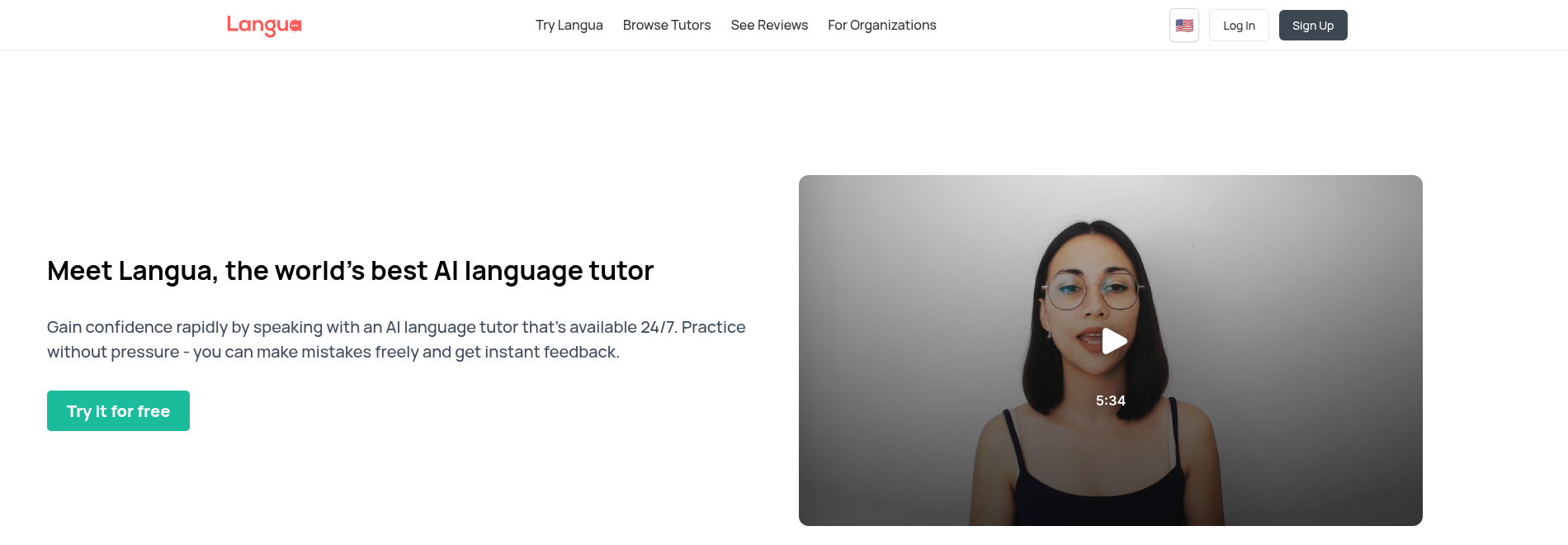
It isn't only for intermediate learners. Beginners can start with a guided course that gets them speaking straight away, with suggested replies when they're stuck and the option to say a word in their own language. Its pronunciation feedback is limited for now, so if accent work is your main goal, pair it with a tutor.
Where Duolingo still has the edge is a free plan and stronger game mechanics, and it covers more languages. Langua offers a free trial, then costs from $12.50 a month (Standard, billed annually) to $29.99 a month (Unlimited, billed monthly). If you've tried Speak and want more open conversation, our Speak review compares the two in more depth.
Conclusion
In the Speak vs Duolingo choice, the right answer depends on your goal. Duolingo is the better pick for a free daily habit and for learning one of its many smaller languages. Speak is the better pick if you want to start speaking early in one of its six languages and you're happy to pay.
Neither app will take you all the way to confident conversation on its own. Once you're past the first few months, you'll progress faster by adding regular conversation practice with real feedback, whether that's with a tutor or an AI tutor like Langua, which we built for exactly this.
Frequently asked questions
Is Speak better than Duolingo?
For speaking practice, yes: you speak in almost every Speak exercise, while Duolingo is mostly tapping and typing. Duolingo is better value if you want a free daily habit, a web version or one of its 40+ languages. From intermediate level up, though, Langua is likely the best option, with a detailed report after every chat and personalized grammar drills based on your mistakes. For beginners, its guided course is innovative and worth a try.
Is Speak free?
No. Speak offers a 7-day free trial, then a paid subscription is required to keep learning.
How much does Speak cost?
In the US App Store, Speak Premium costs $17.99 a month or $83.99 a year, and Premium Plus costs $39.99 a month or $164.99 a year. UK prices are £12.99 or £59.99 for Premium and £29.99 or £124.99 for Premium Plus. Prices vary by country and promotions.
What languages does Speak teach?
For English speakers, Speak teaches Spanish, French, Japanese, Korean, Italian and Chinese (Simplified). It also teaches English to speakers of 15 languages. According to Speak's help centre, the Japanese, Korean and Italian courses are beginner only for now.
Does Speak use spaced repetition?
In effect, yes. Smart Review works like spaced repetition, bringing back phrases from your lessons, but you can't add your own words. If you want spaced repetition for vocabulary from your own conversations, Langua turns the words you save into flashcards.
Does Duolingo have AI conversation practice now?
Yes. Video Call lets you have a spoken conversation with Lily, one of Duolingo's characters, in English, French, Spanish, Italian, German or Portuguese. It used to need Duolingo Max, but most new Super subscribers now get it too, and Duolingo plans to give it to existing Super subscribers.
Is Duolingo Max still available?
Existing subscribers still have it, but Duolingo's CEO has said the company may restructure Max or stop offering it, now that Video Call is moving into Super, and some new subscribers are no longer shown Max at all. Check the plans in the app before you buy.
Can I use Speak and Duolingo together?
Yes. Many learners use Duolingo for vocabulary and a daily habit, and Speak for speaking practice. Paying for both on annual plans costs roughly $168 to $180 a year in the US, so decide first which gap you most need to fill.