Learn English with AI: the best AI English learning apps, tested & reviewed
I've spent a lot of time testing AI English learning apps. The quality varies dramatically, and most fall short in ways that matter for learners.
In this article, I'll share my honest picks for the best tools, with a clear breakdown of pros, cons, and pricing for each.
The Best AI English Learning Apps
#1: Langua
Best for: Motivated Learners & AI English Conversation Practice
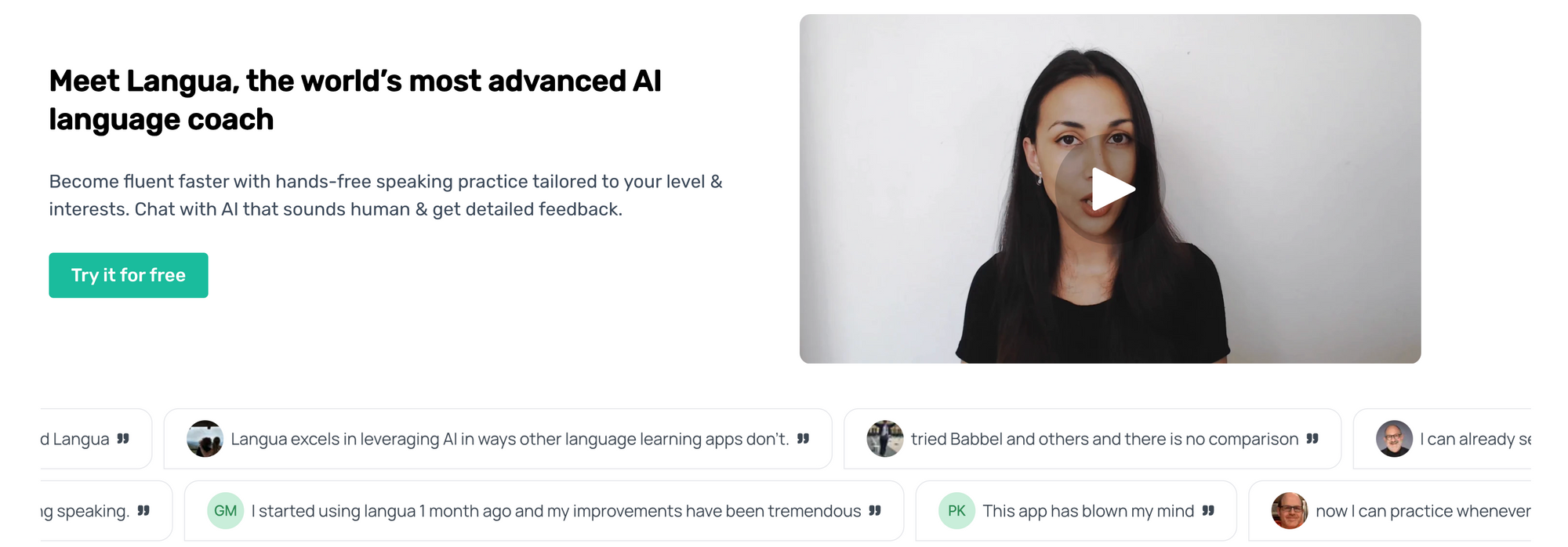
Langua is a comprehensive AI platform for learners who want to genuinely improve their English speaking skills. It covers conversation practice, vocabulary building, listening, and reading - all in one place.
Advantages:
- Practice speaking in a huge variety of ways: roleplays, discussions around your interests, vocabulary practice, and more.
- Call Mode lets you practice hands-free with a phone-style conversation, great for getting comfortable speaking naturally.
- Voices are cloned from native English speakers, so conversations feel real rather than robotic.
- Get instant corrections with detailed explanations. Choose whether feedback is explicit or subtle, verbal or written, and receive a full report after each chat.
- Grammar practice is personalized to your actual mistakes - if you keep slipping up on a particular structure, Langua creates targeted drills to fix it.
- An AI memory system means the app learns about you over time, so conversations feel more personal across sessions.
- Save words in one click, then reinforce them through spaced repetition flashcards, vocabulary chats, and AI-generated stories.
- Speak in your native language when stuck, and the AI will still understand you.
- Available on web, iOS, and Android.
Disadvantages:
- Like all AI, transcription occasionally misreads what you say. Langua lets you switch between several AI models to minimize this.
- There's a lot to explore at first, though the onboarding helps orient you.
Pricing: $12–$29/month depending on your plan. A free account is available, plus a free trial of the Pro version.
You can create a free account on Langua and explore it here.
#2: ChatGPT
Best for: Learners Who Want a Free Option
ChatGPT is the most well-known AI tool in the world. It wasn't built for language learning, and it doesn't come with a ready-made learning system: you have to build one yourself. That can be rewarding if you enjoy experimenting, but it takes time and effort to get consistent results.

Advantages:
- Free version is fairly generous.
- You can ask it to correct your grammar, explain mistakes, or hold a conversation in English.
Disadvantages:
- Not specifically designed for language learning: you have to prompt it carefully and repeatedly ask for corrections.
- Audio mode cuts off recordings during natural thinking pauses, which is frustrating for learners who need a moment to form a sentence.
- No suggested conversation topics, no vocabulary saving, no flashcards: everything is on you to set up.
- No dialect selection.
Pricing: Free (limited), $20/month for the paid version.
#3: Speak
Best for: English Beginners Who Want Structured Practice
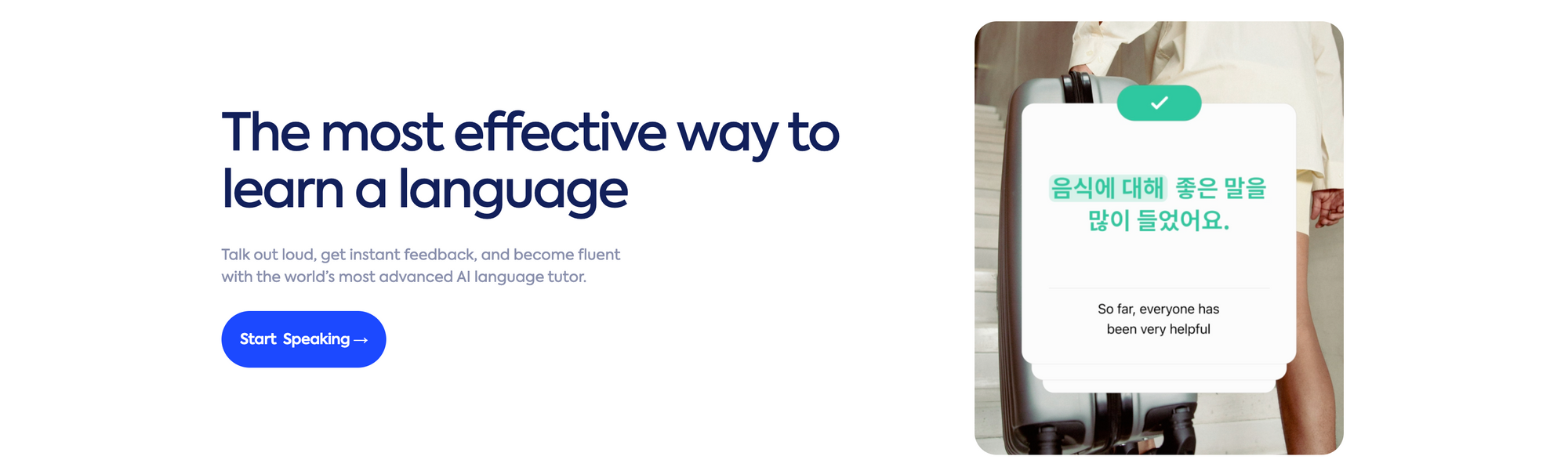
Speak offers a well-structured experience with scenario-based role-plays and an AI tutor for grammar help. It works well for beginners who want a clear learning path, though it loses steam at intermediate levels and beyond.
Advantages:
- Natural-sounding English voices with reliable speech recognition.
- "Speak Tutor" feature lets you ask grammar questions and generate custom practice lessons.
- Well-paced beginner content with helpful pronunciation guidance.
Disadvantages:
- Feedback is somewhat superficial: corrections lack the depth you get from a dedicated AI English conversation practice app like Langua.
- Lesson variety is limited and becomes repetitive at intermediate level and beyond.
- No spaced repetition system for vocabulary.
- Noticeably less effective from B1 level onwards: it's built primarily for beginners and starts to feel limited as you progress.
- Subscription tiers are confusing, with unclear limits on AI lesson access.
Pricing: Varies by region. Premium Plus (with unlimited custom lessons) costs significantly more than the base tier.
#4: Praktika
Best for: Visual Learners Who Like Structured Lesson Paths
Praktika uses animated avatars and organized lesson paths to create a structured English learning experience. It's clean and approachable, but has some meaningful gaps.
Advantages:
- Conversations adapt to your English level reasonably well.
- Clean interface with clearly organized lesson paths.
- Good scaffolding for beginners with guided questions.
Disadvantages:
- Rigid learning paths: if you change your goal, you lose your progress.
- Feedback is minimal and easy to miss mid-conversation.
- Animated avatars can feel distracting, with no audio-only option.
- No spaced repetition or vocabulary tracking system.
- Very limited customization.
Pricing: Requires a minimum 3-month commitment. Pricing varies by country.
#5: Duolingo
Best for: Learners Who Want an Established Brand
Duolingo isn't primarily an AI English speaking app, but it launched two AI-powered features in 2024: Video Call (a conversation with mascot Lily) and Adventures (simulation-style scenarios). These were initially Max-only, but Duolingo has been rolling access out to lower tiers - check the latest on their site.

Advantages:
- Familiar, established platform that many learners already use.
- The gamified format helps with consistency if motivation is a challenge.
- AI features are integrated into the broader Duolingo experience.
Disadvantages:
- Conversation practice is secondary: it's not built around helping you speak English but around the familiar gamified exercises Duolingo is known for.
- At the time of writing, access to AI features is limited for English learners specifically. And AI features like Video Call and Adventures have historically been on premium plans, though access is expanding - check current pricing.
- Conversations feel less realistic compared to dedicated AI English conversation practice tools.
Pricing: Duolingo Super is around $20/month, with the Max tier at $30/month.
Frequently Asked Questions About Learning English with AI
Does an AI English tutor replace the need for a real tutor?
The short answer is no - relying solely on an AI English tutor isn't the best strategy. The longer answer: if you can afford it, combining human tutoring with AI English conversation practice is ideal. Human tutors offer warmth, accountability, and encouragement that AI can't replicate, and they're better at picking up on subtle patterns in your speech. AI, on the other hand, is excellent for flexible practice whenever you have time, without needing to schedule anything in advance.
How can AI be used effectively to learn English?
The key is using it consistently for speaking practice, not just reading or grammar exercises. Platforms like Langua let you practice in a huge range of scenarios, get instant corrections, and build vocabulary - all in one place. Short daily sessions add up quickly and build real confidence.
What are the limits of learning English with AI?
AI has improved enormously, but it can still miss subtle errors and lacks the human warmth of a real conversation partner. The best results come from treating AI as a complement to other methods (tutors, podcasts, real conversations) rather than a full replacement for them.
What should I look for when choosing an AI English learning app?
Consider the quality of voice recognition and speech output, the range of conversation topics, and how well the app adapts to your level. The best tools give automatic corrections with explanations, not just flags that something is wrong. It's also worth checking whether there's a vocabulary system, since building word knowledge alongside speaking practice makes a real difference. Taking advantage of free trials before committing is always a good idea.
Interested in learning other foreign languages using AI? See more:
Learn German with AI | Learn Italian with AI | Learn French with AI | Learn Spanish with AI | Learn Japanese with AI | Learn Chinese with AI | Learn Portuguese with AI